sea, and only 12 landed on or near their designated landing zones.
McCardie’s own glider, carrying his battalion headquarters, was one of
the many that landed in the sea, approximately two miles short of the
Sicilian shoreline. He ordered the six men who could swim to make their
way to shore while he and the rest of his party clung to the wreckage.
Hours later, they were rescued by a boat. Tired and barefoot, McCardie
and his men eventually made it to land, where they spent the night
ghting minor skirmishes with scattered Italian troops.
The battalion’s mission was in jeopardy from the start. A small group of
men from the South Staffords, led by Lieutenant Withers, was the only
force to land near the bridge. They successfully captured it and disarmed
the demolition charges, but the rest of the battalion was scattered
across the countryside. Over the next
day, McCardie’s men, along with other
stragglers from the 1st Airlanding
Brigade, fought their way towards the
objective. Despite the overwhelming
odds and the complete failure of the
landing plan, small groups of glider
troops continued to harass the enemy
and disrupt their communications. The
heroic defense of the Ponte Grande by
the isolated platoon was a key factor
in the eventual success of the landing.
McCardie and his men nally reached
the bridge, which was by then in the hands of the advancing seaborne
forces.
After the Sicilian campaign, McCardie’s battalion was withdrawn to
North Africa to rebuild and ret. His command’s next major engagement
would be the Battle of Arnhem during Operation Market Garden in
September 1944.
Operation Market Garden
Lieutenant-Colonel Derek McCardie’s command of the 2nd Battalion,
South Staffordshire Regiment, was put to its ultimate test at the Battle
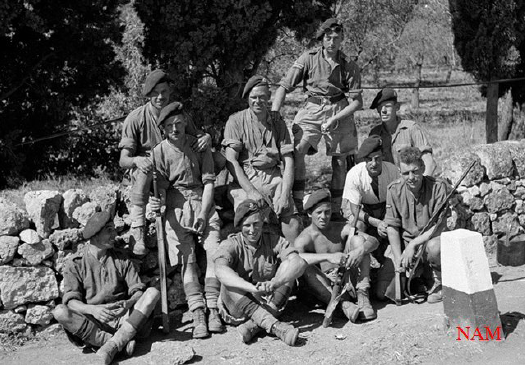
A squad of South Staords glider troops pose by a
roadside wall opposite Syracuse cemetery, 11 July
1943, the day aer the battle for the Ponte Grande
bridge